

 ₹https://storesnearme.mysleepwell.com/mattress-shop/-in-gwalior/-in-lashkar/sleepwell-gallery-akshitaenterprises-in-lashkar-gwalior--6vdbyA/articles/bunk-bed-how-to-choose-the-right-mattress-for-size-and-comfort--3e141c30-9a15-402c-9285-133a305eda08
Sleepwell Gallery - Akshita Enterprises, Lashkar, gwalior
Mattress Store in Lashkar, Gwalior, Madhya Pradesh
Daya Nand Marg, Mochi Oli, Nearby Uniform Junction, Lashkar, gwalior, madhya pradesh - 474001
Request for Free Home Visit or Request a Call Back
Sleepwell Gallery - Akshita Enterprises Social Feeds in Lashkar, gwalior
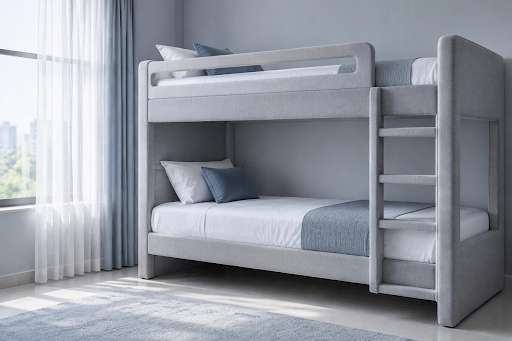
Bunk Bed: How to Choose the Right Mattress for Size and Comfort
A bunk bed mattress needs to fit the frame snugly, stay within a safe thickness, and remain supportive night after night. Checking the frame size, thickness, firmness, and weight before buying helps the whole setup feel comfortable and secure.
Bunk beds are a smart answer to shared rooms. Two beds take up one footprint, which leaves more floor space for studying, playing, and storage.
The mattress, however, is easy to overlook. A bunk bed has fixed dimensions, guard rails and limited headroom, so a mattress that works well on a regular bed may not suit it.
Choosing well comes down to a few practical checks.
What Makes a Bunk Bed Mattress Different?
A bunk bed mattress is a standard mattress used within tighter limits. The frame decides how much space it has, the guard rails decide how thick it can be, and the sleeper's age decides how much support it needs.
It also gets handled more often. Sheets need changing, covers need airing, and, in a child's room, the bed is used for reading, playing, and relaxing during the day.
This is why size, thickness, support, and weight deserve equal attention.
Start with the Frame, Not the Standard Size
Even if you have bought a standard frame, you should measure the inside of each bunk frame from rail to rail and from headboard to footboard. Most bunk beds are designed for single mattresses, but dimensions can vary from one design to another.
A mattress that is too small leaves gaps and can shift during the night, which can disturb you while sleeping. One that is too large bends at the side, sits higher than the rails, and sits unevenly on corners, which can be dangerous.
So it is better to measure both bunks separately and check whether the frame manual mentions a recommended mattress size or, if it is handmade, check if it needs a custom mattress. If it does, treat that as the starting point.
Check Thickness, Especially for the Top Bunk
Thickness matters most on the upper bunk. The guard rail is there to keep the sleeper in place, and a thick mattress reduces how much of that rail stands above the sleeping surface.
Many bunk bed guidelines suggest that the guard rail should rise at least about 5 inches (around 13 cm) above the mattress. Check the frame's instructions for its exact limit and choose a thickness that stays within it.
The lower bunk usually has more flexibility, but keeping both mattresses similar in thickness helps the set feel even. It is also worth remembering that upper bunks are generally not recommended for children under six.
Think About Support and Comfort
A growing child or teenager needs a sleeping surface that supports the body evenly. A mattress that is too soft can sag over time, while one that is too firm can feel uncomfortable, especially for lighter sleepers.
A medium level of firmness suits most children and teenagers, offering cushioning along with support. Older teenagers or adults using the lower bunk may prefer a slightly firmer feel.
Bunk beds are often used for several years, so comfort that holds its shape matters as much as comfort on the first night.
Look at Weight and Handling
While weight is not an issue when sleeping, it can be while you are changing sheets on a bunk bed. It is easier with a mattress that can be lifted and shifted without effort. It matters especially if the top bunk has limited space between the mattress and the ceiling.
A lighter mattress is easier to tuck sheets around and simpler to move when cleaning the room. Going for a foam mattress is generally easier to handle than heavier constructions.
Consider Airflow and Upkeep
Bunk beds often sit in smaller, shared rooms, and the upper bunk is closer to the ceiling, where warm air collects. A breathable mattress with a washable cover can make the sleeping surface feel more comfortable.
A mattress protector also helps to maintain hygiene. Spills and everyday wear are common in children's rooms, and a protector keeps the mattress cleaner for longer.
Bunk Bed Mattress Checklist
Choose a Sleepwell Mattress for Your Bunk Bed
A bunk bed works best when every part of the setup suits the way the room is used. A Sleepwell mattress that matches the frame size, stays within the recommended thickness, and offers comfortable support gives children and teenagers a dependable place to rest, whether on the top bunk or the bottom. Sleepwell Ortho Nirvana comes in 4- and 5-inch thicknesses with a medium-firm feel and Acuprofile support, and its slimmer profile helps maintain guardrail clearance on the top bunk.
Explore Sleepwell mattresses to find a size and comfort level that fits your bunk bed and the sleepers who use it. Visit your nearest Sleepwell store in Lashkar, Gwalior to explore available mattress options and find the right fit for your bunk bed.
FAQs
1. Which mattress is good for bunk beds?
You have to look for one that matches the frame's inner dimensions and stays within the recommended thickness; always measure the frame and check the manufacturer's guidance before buying.
2. What mattress thickness is best for a top bunk?
A thinner mattress usually works better on the top bunk because it keeps the guard rail well above the sleeping surface. Check the frame's recommended limit, or if there is none, keep the mattress 4 to 5 inches below the rail.
3. Do both bunks need the same mattress?
Not necessarily; the size must fit each frame, but firmness can differ based on who sleeps there. Keeping similar thickness helps the bunks look and feel even.
4. Is a firm or soft mattress better for children?
A medium firmness generally suits most children, as it offers support with some cushioning. Individual comfort and age also play a part.
5. How do I keep a bunk bed mattress clean?
Use a washable cover and a mattress protector, air the mattress regularly, and wash bedsheets often. This is especially useful in children's rooms.